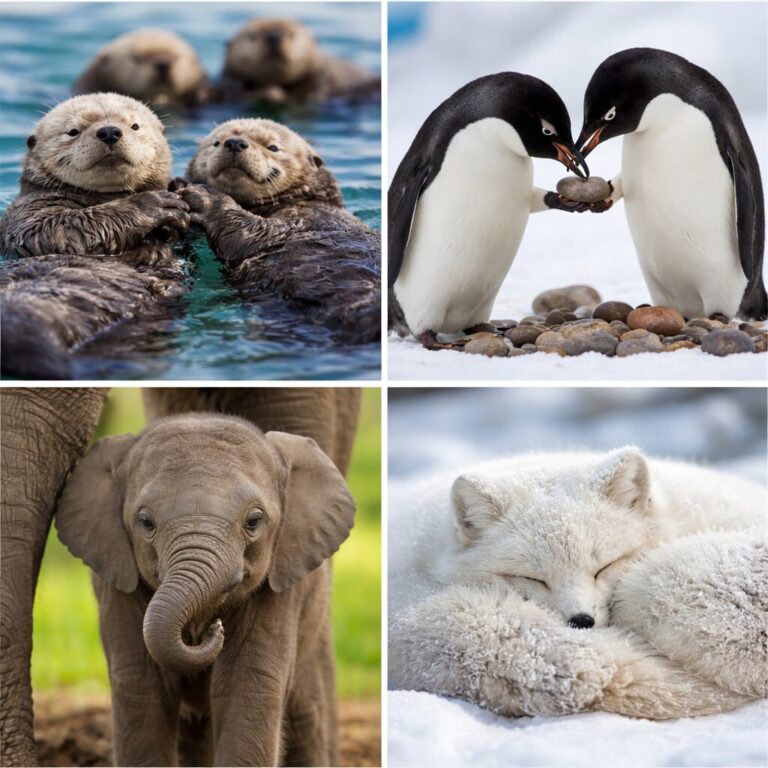

The animal kingdom is full of fascinating behaviors, but some facts are so heart-melting that they instantly brighten our day. From penguins giving “engagement pebbles” to baby elephants sucking their trunks, nature has a surprisingly adorable side.
But if we had to crown one fact as the cutest animal fact of all, one tiny marine mammal consistently steals the spotlight.
🏆 The Winner: Sea Otters Hold Hands While They Sleep
The sea otter (Enhydra lutris) has an irresistibly sweet sleeping habit:
They hold hands while floating on their backs so they don’t drift apart.
Sea otters live in coastal ocean waters and sleep on the surface. Because ocean currents can easily separate them, they often hold paws with one another to stay together. Sometimes they even form large groups called rafts, linking together in what might be the most wholesome survival strategy in the animal world.
Why This Makes It Extra Special
This behavior isn’t just adorable — it’s practical. Holding hands:
- Keeps families from drifting away
- Maintains group safety
- Strengthens social bonds
- Helps mothers stay close to their pups
It’s a perfect mix of survival instinct and sweetness.
Other Animal Facts That Are Almost Too Cute to Believe
While sea otters might take the crown, several other animals deserve honorable mention.
🐧 Penguins Propose with Pebbles
The Adélie penguin (Pygoscelis adeliae) has a charming courtship ritual. Males search carefully for the smoothest pebble they can find and present it to a female.
If she accepts, they use the pebble to help build their nest together.
It’s nature’s version of an engagement ring.
🐘 Baby Elephants Suck Their Trunks
Just like human babies suck their thumbs, baby elephants suck their trunks for comfort.
This self-soothing behavior helps them feel secure and relaxed, especially in new or stressful situations.
🐨 Koalas Hug Trees to Stay Cool
Koalas aren’t hugging trees just for cute photos. Tree trunks are often cooler than the surrounding air, and pressing against them helps regulate body temperature during hot Australian days.
Adorable and scientifically smart.
🦊 Arctic Foxes Use Their Tails as Blankets
The arctic fox curls into a ball while sleeping and wraps its thick, fluffy tail around its face to conserve heat.
In freezing Arctic conditions, this built-in blanket makes all the difference.
Why Do We Find Animal Facts So Cute?
There’s actually science behind why these stories melt our hearts.
Humans are wired to respond to what researchers call “baby schema” — physical traits like:
- Large eyes
- Round faces
- Small noses
- Soft or fluffy features
These traits activate caregiving instincts in our brains. Many animals (especially babies) naturally share these features, which is why we instantly perceive them as cute.
Cuteness isn’t random — it’s evolutionary.
Final Verdict: What Is the Cutest Animal Fact?
While opinions vary, one fact consistently captures hearts worldwide:
Sea otters holding hands while they sleep to avoid drifting apart.
It’s affectionate, practical, and visually unforgettable — the perfect combination of survival and sweetness.
And honestly, it’s hard not to smile imagining it.
Frequently Asked Questions (FAQs)
1. Do sea otters always hold hands while sleeping?
Not always. They sometimes anchor themselves in kelp forests instead, but they frequently hold paws when resting in groups.
2. Are penguins truly monogamous?
Many penguin species form strong seasonal pair bonds, and some reunite with the same partner each breeding season — though it varies by species.
3. Why do baby elephants suck their trunks?
It’s a comforting behavior similar to thumb-sucking in humans. It helps them feel safe and relaxed.
4. Is there a scientifically proven “cutest” animal?
No official ranking exists. However, animals like sea otters, red pandas, quokkas, and baby seals are commonly voted among the cutest.
5. Why do humans react so strongly to cute animals?
Because of evolutionary biology. Baby-like features trigger nurturing instincts in our brains, making us feel protective and affectionate.